
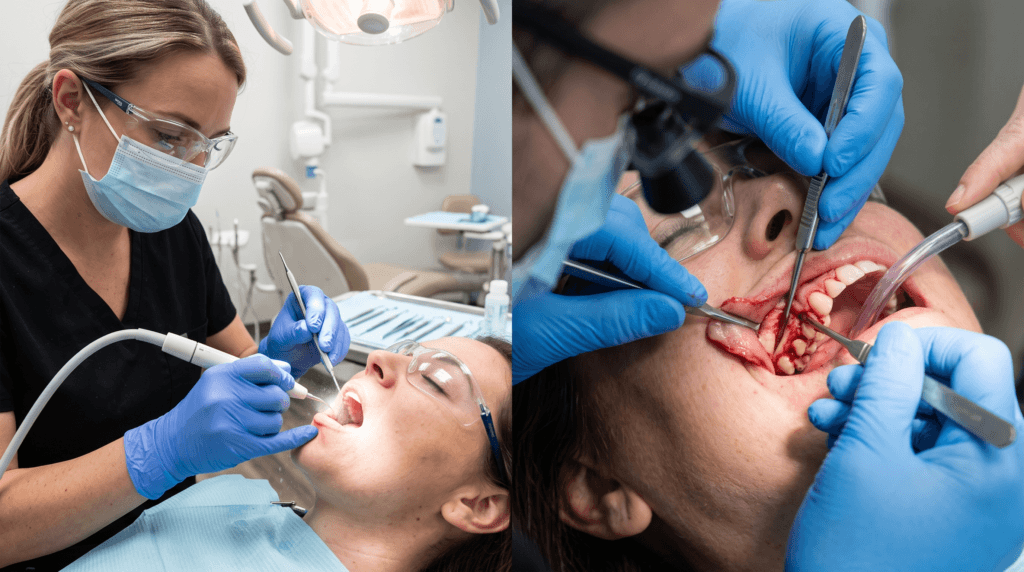
Gum disease treatment comes in two basic forms: surgical and nonsurgical. Whether you’re dealing with mild gingivitis or something much more advanced like periodontitis, knowing all your options makes a big difference. Some treatments are pretty straightforward; others are a bit more involved.
Nonsurgical care usually focuses on cleaning out bacteria and building better oral health habits. Surgical options are only considered when the disease has caused deeper problems that basic cleaning just won’t solve. Each approach has its upsides and downsides, so understanding them is really important for making the best choice for your smile and health.
This article will break down the differences between surgical and nonsurgical gum disease treatments, what you can expect from each, how to decide which could be best for you, and tips for maintaining strong gum health moving forward.
Understanding Gum Disease
Gum disease, or periodontal disease, happens when the tissues and bone that support your teeth get damaged by bacteria. Early-stage gum disease (gingivitis) is usually marked by swelling and bleeding gums. If ignored, it can turn into periodontitis, which risks long-term complications like tooth loss, bone shrinkage, and even links to general health issues such as heart disease and diabetes.
Symptoms of gum disease may include red or swollen gums, bleeding when brushing, persistent bad breath, and gums pulling away from the teeth. Keeping an eye out for these signs and visiting your dentist regularly is your best defense.
Nonsurgical Gum Disease Treatments
What Nonsurgical Treatments Involve
Nonsurgical treatments are the go-to first step for tackling gum disease. These aim to remove built-up bacteria and tartar, then encourage a healthy environment in your mouth so the gums can heal. Some of the most common options include
- Professional Dental Cleaning: Basic cleaning removes plaque and tartar that’s impossible to brush away at home. Most people get these done twice a year, but if gum disease shows up, you might need them more often.
- Scaling and Root Planing: Often called a “deep cleaning,” this method uses special tools to reach below the gumline and smooth out tooth roots. This helps tone down inflammation and gives the gums a chance to reattach to your teeth.
- Medicinal Rinses and Antibiotics: Sometimes your dentist will suggest antimicrobial rinses or prescribe antibiotics (in pill or gel form) to target infection in tough spots. These can be a real boost for stubborn cases.
Who Benefits Most from Nonsurgical Treatment?
- Mild to moderate gum disease (gingivitis or early periodontitis)
- People aiming to prevent further progression
- Anyone who responds quickly to better oral hygiene habits
- Those who want to avoid surgery if possible
Pros and Cons of Nonsurgical Options
- Pros:
- No recovery time required
- Less invasive and comfortable for most people
- Cost-effective and usually covered by dental insurance
- Can quickly show improvement if caught early
- Cons:
- May require repeated treatments to keep bacteria in check
- Not as effective if disease is advanced
- Requires commitment to good home care and regular dental visits for success
Surgical Gum Disease Treatments
When Surgery Might Be Needed
Surgical options come into play when the damage is too serious to fix with cleanings alone. If bacteria have invaded pockets deep below the gums or caused bone loss, surgery is usually needed to give your mouth the best shot at healing and keeping your natural teeth.
Types of Surgical Approaches
- Flap Surgery: The dentist moves the gums aside, cleans deep under the gumline, and stitches everything snug. This gives direct access to the diseased areas.
- Bone Grafts: If there’s bone loss, either natural or synthetic bone material might be packed into the area to help spur new bone growth and provide more support to your teeth.
- Soft Tissue Grafts: If gums have receded, tissue can be taken from another part of your mouth and used to cover exposed roots, protecting them and improving appearance.
- Guided Tissue Regeneration: Special membranes are placed to help bone and gum tissue grow back in the right places, especially when bone loss is an issue.
- Laser Surgery: Lasers can be used instead of scalpels, which often reduces healing time and can feel less intimidating for patients.
Who Could Benefit from Surgery?
- People with advanced gum disease and deep pockets
- Anyone needing bone or gum tissue rebuilt
- When nonsurgical treatments haven’t been enough
- Cases with continuing infection or rapid bone loss
Pros and Cons of Surgical Treatments
- Pros:
- Gives direct access to clean beneath the gums
- Repairs or regrows bone and tissue
- Can fix more severe problems than basic cleaning alone
- Cons:
- Longer and sometimes uncomfortable recovery (a few days to a week or more)
- Can be intimidating, especially for those nervous about dental work
- Usually costs more than nonsurgical options; insurance coverage may vary
Main Differences Between Surgical and Nonsurgical Treatment
- Invasiveness: Nonsurgical approaches focus on cleaning and medications, while surgical methods include procedures that repair or rebuild tissue and bone.
- Recovery: Nonsurgical options usually let you get back to life right away. Surgery might mean taking time to rest and careful home care during healing.
- Cost: Nonsurgical is often less expensive and commonly covered by dental insurance. Surgical treatment costs more, especially when advanced tech or grafts are needed.
- Effectiveness: If gum disease is mild to moderate, nonsurgical care often does the trick. More advanced cases see better results with surgical methods.
- Home Maintenance: Both require solid hygiene at home, but those who’ve had surgery may need extra care or special routines during recovery.
What Patients Say About Their Experience
- Nonsurgical: People appreciate the convenience and notice improvements relatively quickly. Some need several visits to keep things under control, but most find these procedures manageable and worth it if they’re motivated to keep up at home.
- Surgical: While surgery can be daunting, many patients ultimately find it worthwhile. It’s normal to experience some swelling or discomfort following the procedure, but most dentists will provide clear instructions for a smoother recovery and help you manage any concerns.
Most dentists suggest starting with nonsurgical care and moving to surgery only if it’s really necessary. Learning about your choices means you can ask smarter questions, get clear answers, and feel more in control of your path forward.
How to Choose the Right Gum Disease Treatment
- If gum disease is caught early, and you maintain good oral hygiene, nonsurgical care is usually all you need.
- For cases with a lot of bone or tissue damage, or persistent infection, surgery could be the best way to save your teeth and restore oral health.
- Talk with your dentist and ask about what’s involved, possible alternatives, recovery times, and costs before making a decision. Don’t hesitate to get a second opinion, especially if you feel nervous about anything invasive.
- Look at your own habits too—avoiding tobacco, brushing and flossing regularly, and eating a balanced diet all help keep treatment results lasting longer.
Wrapping Up
Battling gum disease is a step-by-step process. Both surgical and nonsurgical methods have their place, and combining expert care with solid at-home habits is crucial. Teaming up with your dental professionals helps you achieve the healthiest possible outcome and keep your smile strong for the long haul. If you want to read about real experiences or check out more resources, visit the American Dental Association or the American Academy of Periodontology for extra support and guidance.