
If you want to keep your teeth and gums in good shape, it helps to understand how plaque works and how to get rid of it. Plaque is that soft, sticky film full of bacteria that builds up on your teeth throughout the day. If the plaque is there too long, it hardens into tartar, which can start irritating your gums. That’s usually how gum disease begins. The good news? It’s much easier to prevent than to fix later. Let’s walk through what actually works for removing plaque at home and what to do when it hardens.
Why Plaque Removal Matters
Plaque isn’t just harmless buildup. The bacteria in it produce acids that wear down enamel and irritate your gums. Over time, that can lead to cavities, gum disease, and bad breath. If plaque sticks around, your gums might look red, feel swollen, or bleed when you brush. Staying on top of it daily can save you from bigger dental issues like periodontal disease and extra trips to the dentist.
Daily Plaque Removal Techniques
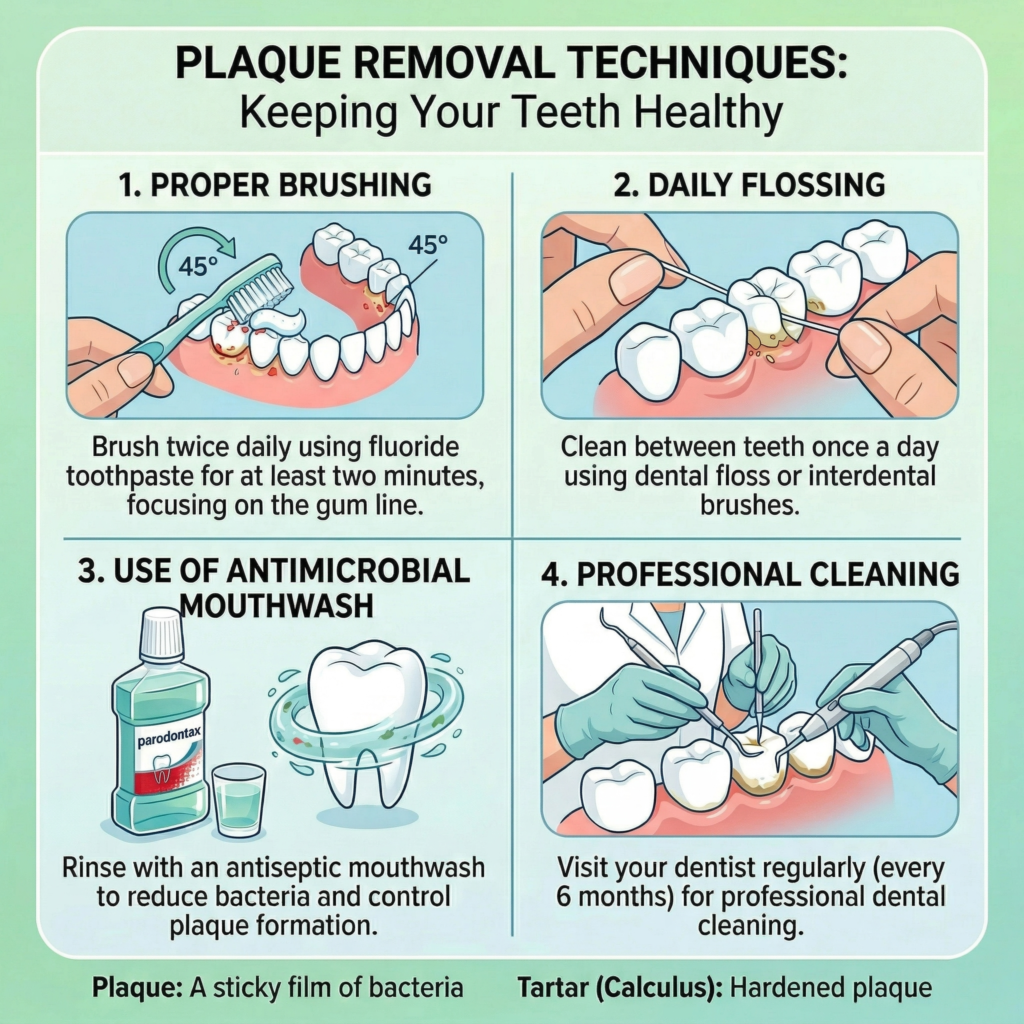
A consistent routine does most of the work. Here’s a simple approach that covers the basics:
Brush twice a day:
Use a soft-bristled toothbrush and spend at least two minutes brushing. Focus on every surface and use gentle, circular motions. Electric toothbrushes can make this much easier and often do a better job, especially in hard-to-reach spots.
Use fluoride toothpaste:
Fluoride helps strengthen enamel and fight bacteria. If you’re not already using it, it’s an easy upgrade that makes a real difference.
Floss daily:
Plaque loves hiding between teeth. Floss, floss picks, or interdental brushes can help clear it out. If flossing feels awkward, try soft picks or a water flosser; they’re easier for many people to stick with.
Add mouthwash:
An antibacterial rinse helps reach areas your brush can’t. Alcohol-free options are usually gentler and won’t dry out your mouth.
How to Remove Hardened Plaque at Home
Once plaque turns into tartar, it’s a different story. Tartar is rough, stubborn, and usually forms along the gumline or behind teeth. At that point, home care can only do so much.
Here’s what can help a little:
- Tartar-control toothpaste: Helps slow buildup but won’t remove existing tartar.
- Electric toothbrushes: May reduce light buildup and surface stains.
- Dental tools: Available online, but risky if you’re not trained, plus easy to damage gums or enamel.
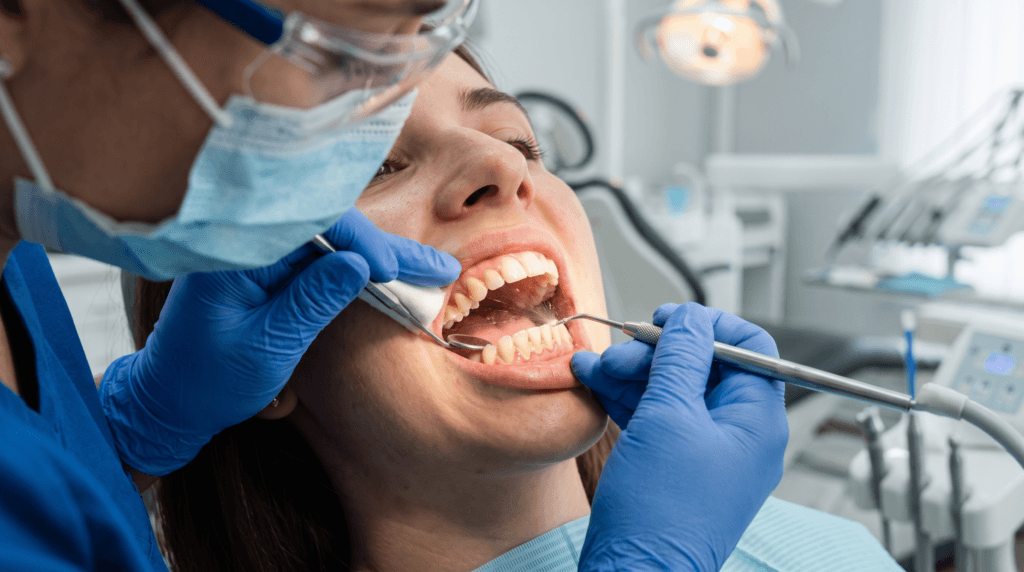
If you’re seeing yellow or hard deposits that won’t budge, it’s time for a professional cleaning. That’s the safest and most effective option.
Natural Ways to Help Prevent Plaque
If you like adding natural options to your routine, a few methods can support your daily care:
Oil pulling:
Oil pulling is the process of swishing coconut or sesame oil for 10–20 minutes may help reduce bacteria. The evidence is limited, but some people like how it feels.
Baking soda:
It’s mildly abrasive and can help remove surface stains. Use it occasionally, not daily, to avoid wearing down enamel.
Crunchy fruits and vegetables:
Foods like apples, carrots, and celery can help scrub teeth as you chew and boost saliva, which naturally rinses away bacteria.
These won’t remove tartar, but they can help keep plaque from building up in the first place.
Can Any Chemical Dissolve Plaque?
Not really, at least not at home. Soft plaque can be managed with brushing, flossing, and fluoride, but hardened tartar doesn’t dissolve with over-the-counter products. Dentists remove it using specialized tools, not chemicals.
Some rinses contain ingredients like zinc or pyrophosphates to slow tartar buildup. Stronger options like chlorhexidine may be prescribed short-term, but they’re not meant for regular use.
Does Vinegar Help?
Vinegar comes up a lot as a DIY solution, especially apple cider vinegar. While it’s acidic enough to affect plaque, it can also damage your enamel and irritate your gums. Over time, that can lead to sensitivity and cavities. It’s not worth the risk. However, there are safer ways to take care of your teeth.
Tips for Keeping Plaque Under Control
Prevention is much easier than dealing with tartar later. A few simple habits go a long way:
- Brush twice a day without rushing
- Clean between your teeth every day
- Use a gentle mouthwash
- Drink and swish water after meals, especially after sugary meals or snacks
- Chew sugar-free gum when brushing isn’t an option
- See your dentist twice a year for cleanings (Any level of self-care does NOT mean you don’t need to visit a dentist).
Common Questions About Plaque
How do I remove hardened plaque myself?
You really can’t do much at home once it hardens. Some products may help slow it down, but removing tartar safely requires professional tools.
What chemical dissolves plaque?
No safe at-home chemical dissolves tartar. Fluoride helps control bacteria, but it doesn’t remove hardened buildup.
Does vinegar dissolve plaque?
It might soften some plaque buildup, but at the same time, it also damages enamel. It’s best to avoid it.
What works naturally?
Nothing dissolves tartar naturally. Daily brushing, flossing, and good habits keep plaque from turning into tartar in the first place.
Everyday Habits for Healthy Gums
Keeping your gums healthy doesn’t have to be complicated; just be consistent. Below are a few pointers that make a difference:
- Replace your toothbrush every 3–4 months (brushes, whether manual or from electronic devices, do wear out significantly, reducing the effectiveness).
- Keep up with regular dental visits
- Be careful with DIY scraping tools
- Avoid acidic “home remedies” like vinegar or lemon juice
Stick with it, and you’ll notice the difference of healthier gums, fresher breath, and fewer to no problems down the line. If something doesn’t feel right, like bleeding or buildup that won’t go away, don’t wait. It’s always better to deal with it early.